Convolvulus Hawkmoth
Agrius convolvuli
The Convolvulus Hawkmoth (Agrius convolvuli) is a moth recorded in Australia 2,366 times. 10 native plants are known to feed or shelter it.
Photo: Nigel Voaden, CC BY, via iNaturalist
Plants to grow for it
-
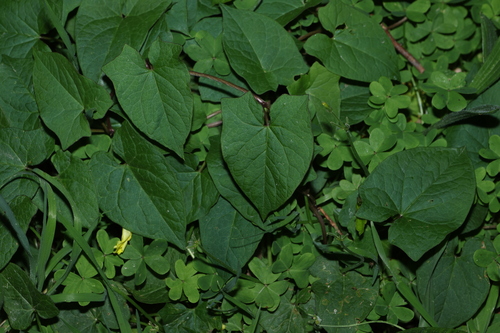 Hedge BindweedCalystegia sepium
Feeds 10 kinds of wildlifeCaterpillar food, Eaten, Also recorded with
- Ivy-like MerremiaMerremia hederacea Feeds 6 kinds of wildlifeCaterpillar food, Also recorded with
-
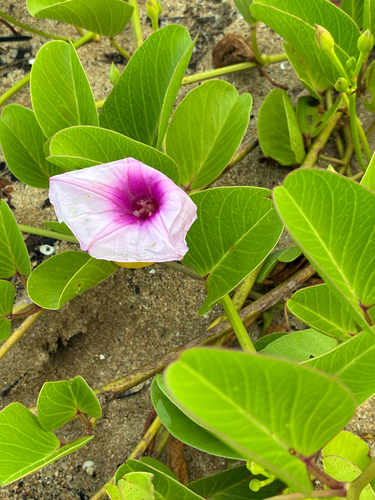 Beach Morning GloryIpomoea pes-caprae
Feeds 3 kinds of wildlifeToxic to petsCaterpillar food
-
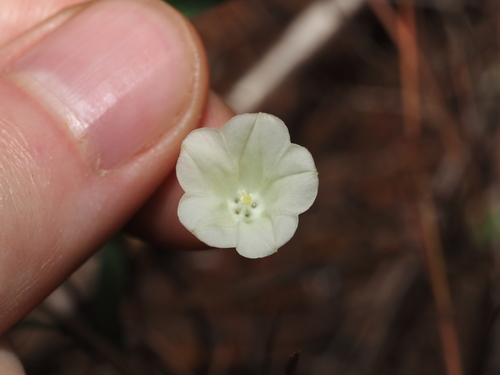 Narrowleaf Morning GloryXenostegia tridentata
Feeds 1 kind of wildlifeCaterpillar food
-
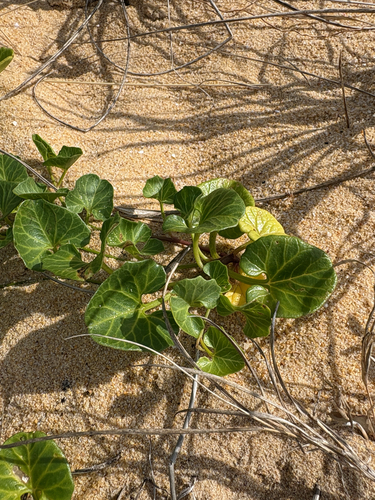 Sea BindweedCalystegia soldanella
Feeds 3 kinds of wildlifeCaterpillar food
-
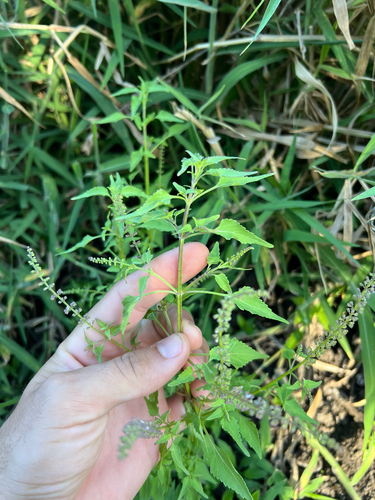 Musk BasilBasilicum polystachyon
Feeds 1 kind of wildlifeCaterpillar food
-
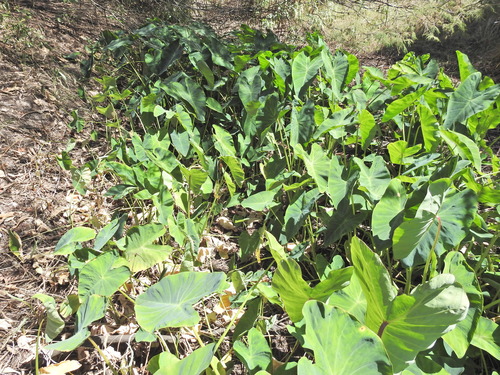 TaroColocasia esculenta
Feeds 14 kinds of wildlifeCaterpillar food
-
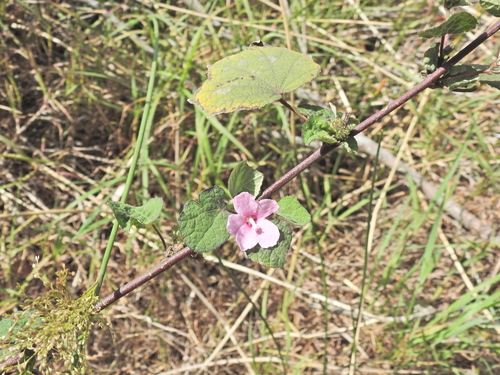 Caesar WeedUrena lobata
Feeds 15 kinds of wildlifeCaterpillar food
-
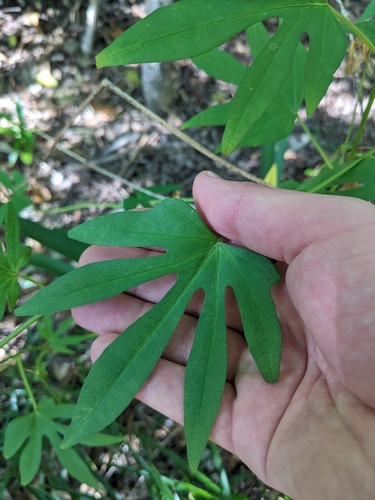 Forest Morning GloryIpomoea mauritiana
Feeds 1 kind of wildlifeToxic to petsCaterpillar food
- Japanese Morning GloryIpomoea nil Feeds 3 kinds of wildlifeToxic to petsAlso recorded with
Sources
- Distant W. L., 1903, Insecta Transvaaliensia: a contribution to a knowledge of the Entomology of South Africa. Order Lepidoptera. Suborder Heterocera. vol issue pages 49–96, pls iii–viii
- Gaden S. Robinson; Phillip R. Ackery; Ian Kitching; George W Beccaloni; Luis M. Hernández (2023). HOSTS (from HOSTS - a Database of the World's Lepidopteran Hostplants) [Data set resource]. Natural History Museum. https://data.nhm.ac.uk/dataset/hosts/resource/877f387a-36a3-486c-a0c1-b8d5fb69f85a via
- Griveaud P., 1959a, Insectes Lépidoptères Sphingidae. vol 8 issue pages 1–161, pls 1–13, 1 map
- Matyot P., 2005, The hawkmoths (Lepidoptera: Sphingidae) of Seychelles: identification, historical background, distribution, food plants and ecological considerations. vol 13 issue pages 55–80
- Padovani, R., Ward, L., Smith, R. M., Pocock, M. J. O., & Roy, D. B. (2020). Insect species richness for each plant species and insect-plant interactions from the Database of Insects and their Food Plants [DBIF] version 2 [Dataset]. NERC Environmental Information Data Centre. https://doi.org/10.5285
- Poelen, J. H. Global Biotic Interactions: Interpreted Data Products. Zenodo https://doi.org/10.5281/zenodo.5708970 (2021).
- Prinsloo G. L. & Uys V. M. (Eds.), 2015, Insects of cultivated plants and natural pastures in Southern Africa. vol issue pages i–xiv, 1–785
- Reji Chacko, M., Albouy, C., Altermatt, F., Brändle, M., Casanelles Abella, J., Boussange, V., Campell, F., Ellis, W. N., Fopp, F., Gossner, M. M., Ho., H., Joss, A., Kipf, P., Neff, F., Petrović, A., Prié, V., Tomanović, Ž., Zimmerli, N., Pellissier, L. (2024). trophiCH v1 - a food web for Switzerl
- Vuattoux R., 1978, Plantes-hôtes et durée de développement de lépidoptères Sphingides élevés à la Station de Lamto (Côte-d'Ivoire). vol 11 issue pages 53–84
- Vuattoux R., Pierre J. & Haxaire J., 1989, Les Sphinx de Côte-d'Ivoire, avec des données nouvelles sur les élevages effectués à la Station écologique de Lamto (Lep. Sphingidae). vol 93 (1988) issue 7–8 pages 239–255
- iNaturalist observation
- iNaturalist observation