Bangalow Palm (Piccabeen)
Archontophoenix cunninghamiana
Bangalow Palm (Archontophoenix cunninghamiana), also called piccabeen palm, is a tall, single-trunked palm of coastal rainforest and moist forest along the east coast of New South Wales and into Queensland. Its feathery fronds and clusters of pink flowers suit a sheltered garden with rich, moist soil.
- Sun
- Part shade
- Soil
- Moist, well-drained
- Water
- Keep moist
- Size
- Up to 20–25 m tall
- Flowers
- Pink to lilac, autumn
Based on its natural habitat: little has been published on growing it.
Photo: Greg Tasney, CC BY-SA, via iNaturalist
- Photo: John Barkla, CC BY, via iNaturalist
- Photo: Stuart, CC0, via iNaturalist
- Photo: Bryce Watts-Parker, CC BY, via iNaturalist
Growing it
In the wild this palm grows in or near rainforest, beside creeks, on alluvial flats (flat land built up from creek silt) and in swampy ground, so a sheltered spot with moist, well-drained soil suits it. Keep the soil from drying out, especially while it is young.
Give it room, because it grows into a tall palm. It has long been cultivated as a garden plant and as a house palm, both in Australia and overseas.
What it looks like
Trunk
A tall, single-trunked palm, slightly swollen at the base. The trunk becomes fissured with age and carries prominent scars where old leaves have fallen.
Leaves
The leaves are pinnate, meaning the leaflets are arranged along a central stalk like a feather. They form a crown at the top of the trunk, 3 to 4 metres long, with 80 to 100 pairs of narrow segments, each 60 to 90 centimetres long. The segments are green on both surfaces.
Flowers
The small flowers are pink to lilac. They are borne in branched clusters 1 to 1.5 metres long, which open in autumn.
Fruit
The fruit is round, fleshy and red, about 13 to 15 millimetres across.
For wildlife
The tall crown of fronds gives cover, and the bright red fruit is the kind of food that fruit-eating birds and bats take. The floras do not name particular animals, so none are listed here.
Threatened wildlife that uses it
Eaten by
- Wompoo Fruit-DoveVulnerable in NSW
- Grey-headed Flying-foxVulnerable
- Rose-crowned Fruit DoveVulnerable in NSW
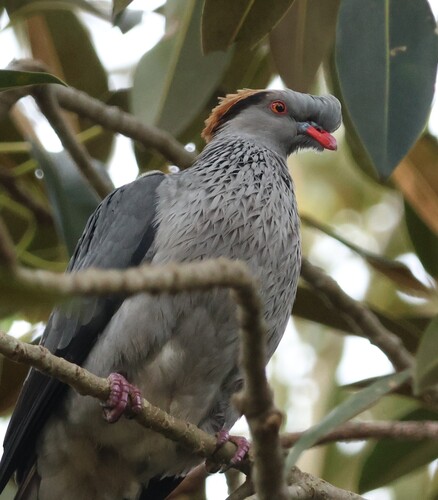 Topknot Pigeon
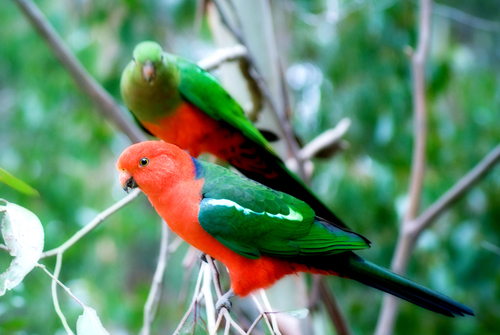 Australian King Parrot
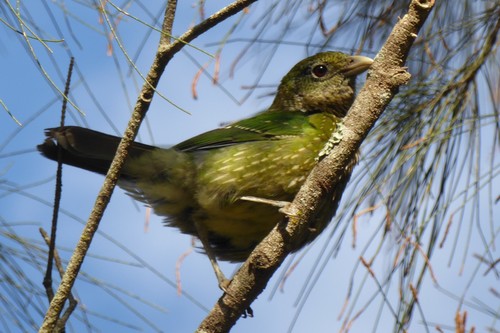 Green Catbird
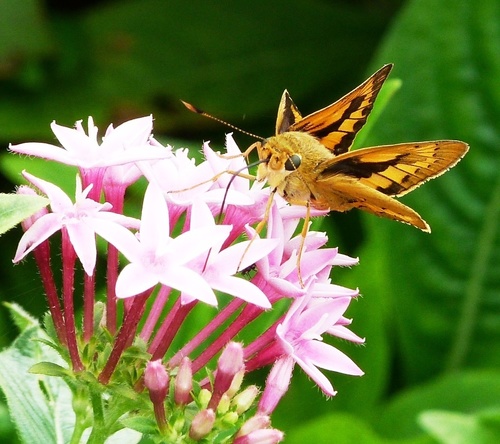 Yellow Palm-dart
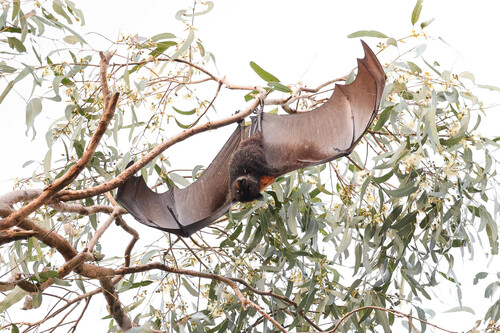 Black Flying-fox
- Brown Cuckoo-Dove
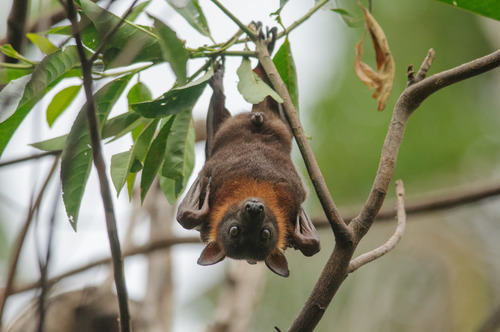 Little Red Flying-fox
- White-headed Pigeon
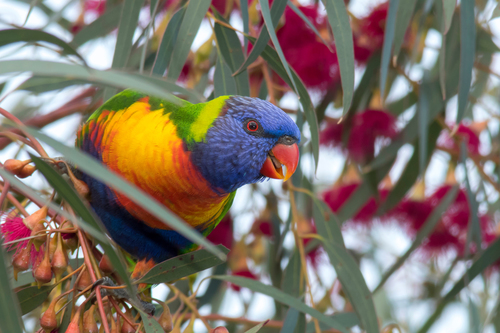 Rainbow Lorikeet
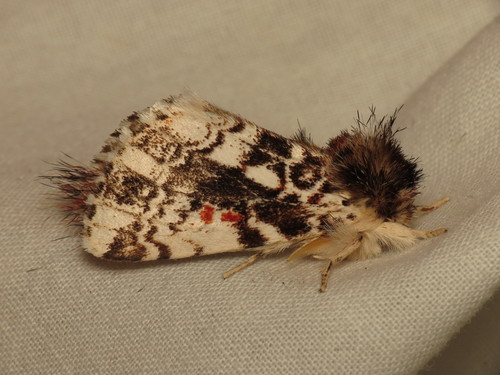 Patterned Notodontid
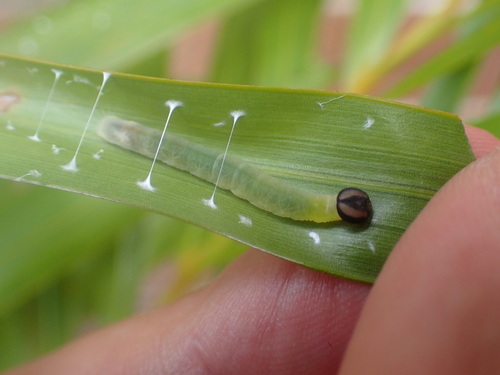 Orange Palm-dart
Also recorded with
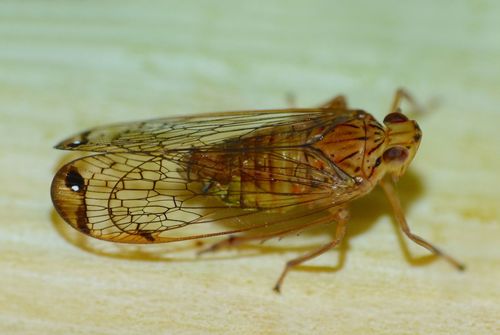
Where it belongs
Grows in or near rainforest and wet forest, mostly in moist sites beside creeks and on alluvial flats, on the coast of New South Wales north from Batemans Bay and into Queensland as far north as the Townsville area.
Suburbs it belongs in include:
Related plants
Sources
- Archontophoenix cunninghamiana, NSW Flora Online, PlantNET, Royal Botanic Gardens and Domain Trust
- Archontophoenix cunninghamiana, Australian Tropical Rainforest Plants, CANBR
- Native range: Australian Plant Census and Alien Flora of Australia. Wildlife links: GloBI and the studies cited on each animal page. All sources