Common Red Bloodwood
Corymbia erythrophloia
Common Red Bloodwood (Corymbia erythrophloia), also called red bloodwood or variable-barked bloodwood, is a small tree of open woodland in eastern Queensland. It has rough, flaky bark with a reddish cast and creamy white flowers in late summer and autumn. It suits a sunny spot with heavy soil.
- Sun
- Full sun
- Soil
- Clay or clay loam
- Water
- Dry once established
- Size
- Up to 8 m tall
- Flowers
- Creamy white, Jan–Apr
Based on its natural habitat: little has been published on growing it.
Photo: Bethlea Bell, CC0, via iNaturalist
- Photo: Tony van Kampen, CC BY, via iNaturalist
- Photo: elawrey, CC BY, via iNaturalist
Growing it
Plant it in full sun. In the wild it grows in open woodland on plains and gentle slopes, usually on heavy soils such as clays and clay loams over basalt, and sometimes on granite. Heavy soil suits it better than deep sand or ground that stays wet.
It comes from country with a marked dry season, so once established it should manage with little extra water. It forms a lignotuber, a woody swelling at the base of the trunk that lets the tree shoot again after damage.
What it looks like
Common Red Bloodwood is a small tree, usually to about 8 m. The bark is rough on the trunk and larger branches, in thin loose flakes that are grey-brown over rich red-brown. Smaller branches are often reddish, or flake to smooth white or cream.
The adult leaves are dull green, lance-shaped to oval and 9 to 24 cm long, with smooth edges. The creamy white flowers open in clusters of seven buds at the branch tips. The woody fruit is urn-shaped to nearly round, 1 to 2 cm long, with a thin rim that flares widely.
For wildlife
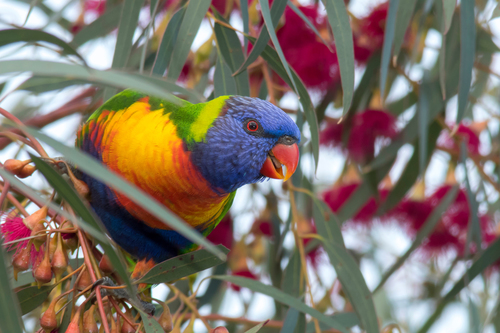
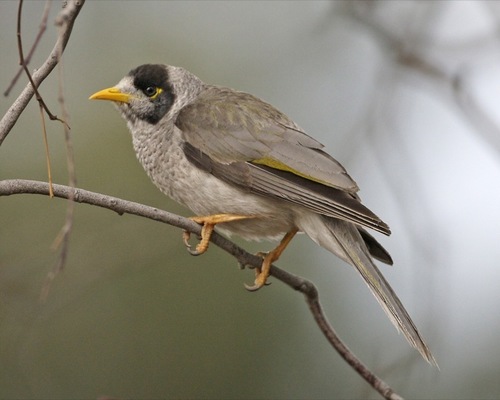
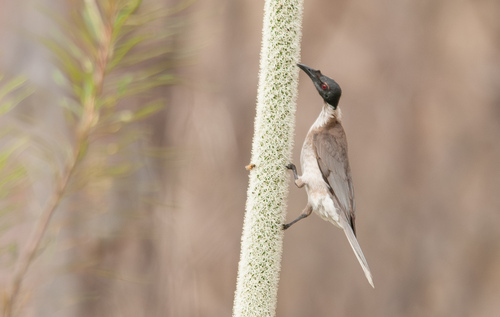
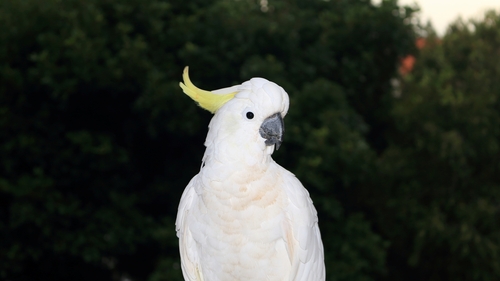
Cockatoos are reported to eat the fruit just before it ripens, so the tree can be a food source for them. Open woodland trees like this one also draw other birds, though sources name no particular species for this plant.
Where it belongs
Endemic to Queensland, it is widespread along the Great Dividing Range from southern Cape York Peninsula to the Atherton Tableland, with other populations further south and in coastal ranges between Marlborough and Miriam Vale. It grows in open woodland on heavy soils.
Suburbs it belongs in include:
Related plants
Sources
- Corymbia erythrophloia, Euclid: Eucalypts of Australia, Lucid Central
- Corymbia erythrophloia Red Bloodwood, Plant Profiles, Queensland Native Seeds
- Native range: Australian Plant Census and Alien Flora of Australia. Wildlife links: GloBI and the studies cited on each animal page. All sources