Parramatta Green Wattle
Acacia parramattensis
Acacia parramattensis, Parramatta Green Wattle, is a tree or shrub of dry forest and woodland in central and south-eastern New South Wales and the Australian Capital Territory. Its ball-shaped yellow flower heads open in summer, when most wattles have finished, so it suits bushland gardens and revegetation plantings.
Spreads. It has spread beyond its natural range along road verges and through seed from plantings, so plant it only within its natural range.
Weedy outside its range. On the environmental weed list for New South Wales, where it spreads beyond its natural range. Plant it only where it grows wild.
- Sun
- Full sun
- Soil
- Shale-based soils
- Water
- Dry once established
- Size
- 2–15 m tall in the wild
- Flowers
- Yellow to cream, Nov–Feb
- Frost
- Hardy, frost tolerant
Based on its natural habitat: little has been published on growing it.
Photo: Carl Ramirez, CC BY, via iNaturalist
- Photo: Toby Jin, CC BY, via iNaturalist
- Photo: Stuart, CC0, via iNaturalist
- Photo: Petra Holland, CC BY, via iNaturalist
Growing it
Where to plant
Choose an open, sunny spot with room for a tree that can reach 15 metres in the wild. It can be grown as a copse (a close grouping of trees), but copses can be short lived and build up many dead stems over time.
Soil and watering
In the wild it grows in dry sclerophyll forest on shale-derived soils. It is drought resistant and frost tolerant, so established plants need little or no extra watering.
Propagation
Grow it from seed. The seed coat is hard, so pour boiling water over the seed before sowing to help it germinate.
What it looks like
Form
A tree or shrub from 2 to 15 metres tall, with bark that is smooth or fissured and greenish black to dark brown or black.
Leaves
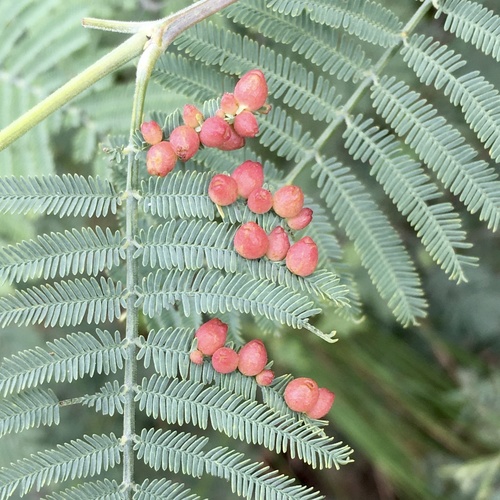
The leaves are bipinnate, meaning each one is divided twice. The small leaflets, called pinnules, are 2 to 7 millimetres long and sit in about 20 to 40 pairs on each division.
Flowers
The flowers form globular heads 4 to 7.5 millimetres across, each with 25 to 50 tiny flowers. They are pale to bright yellow, and grow in branched clusters chiefly from November to February.
Fruit
The pods are fairly flat, leathery and 2.5 to 11 centimetres long.
Look-alikes
It can be confused with Acacia decurrens, which flowers in winter to early spring, and with the hairier Acacia parvipinnula.
For wildlife
No specific animals could be confirmed for this wattle, so none are named here. Its flowers come in summer, when most wattles have finished.
Threatened wildlife that uses it
Caterpillar or larval food plant for
Flowers visited by
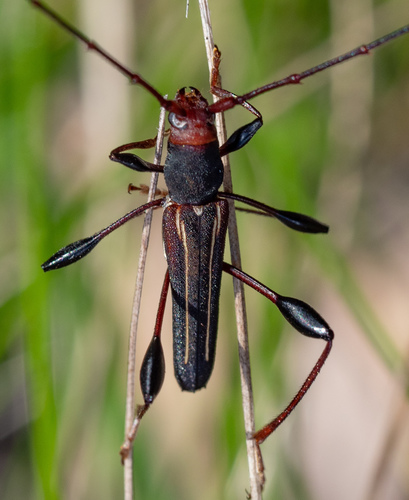
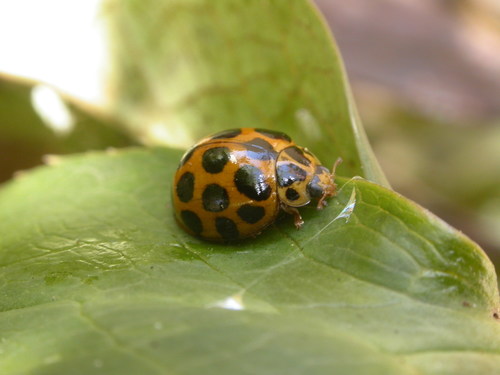
Eaten by
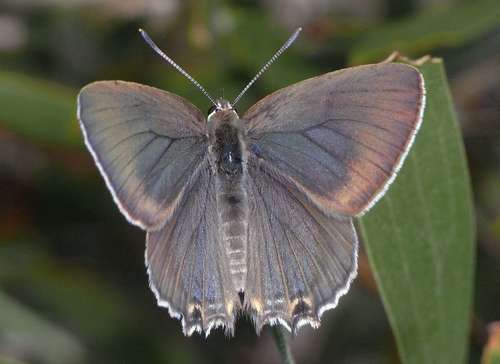 Amethyst HairstreakEndangered in Vic
- Gang-gang CockatooEndangered
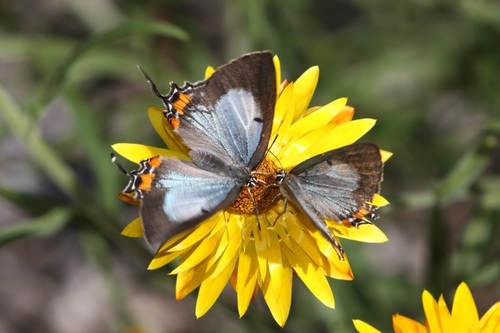 Imperial Hairstreak
- Moonlight Jewel
- Agrilus hypoleucus
Also recorded with
Where it belongs
Parramatta Green Wattle grows naturally in dry sclerophyll forest, mainly on shale, from south of Yengo National Park through the Blue Mountains and the Penrith to Wisemans Ferry district.
Suburbs it belongs in include:
Related plants
Sources
- Acacia parramattensis, NSW Flora Online, PlantNET, Royal Botanic Garden Sydney
- Acacia parramattensis, Plants of South Eastern New South Wales (Lucid key)
- Acacia parramattensis, Austplants resource profile
- Native range: Australian Plant Census and Alien Flora of Australia. Wildlife links: GloBI and the studies cited on each animal page. All sources