Bush-house Paperbark
Melaleuca irbyana
Bush-house Paperbark (Melaleuca irbyana) is a small tree from north-east New South Wales and south-east Queensland, also called Weeping Paperbark or Swamp Tea-tree. It is a paperbark, named for its thick, spongy, papery bark. Scented white flowers cover it from spring into summer, and it suits a moist, low-lying spot in a larger garden.
- Sun
- Full sun
- Soil
- Moist clay or alluvial soil
- Water
- Moist, extra in dry spells
- Size
- Up to 8 m tall, 3–4 m wide
- Flowers
- White, Sep–Jan
- Frost
- Frost tolerant
Photo: Greg Tasney, CC BY-SA, via iNaturalist
- Photo: Lachlan Copeland, CC BY-SA, via iNaturalist
- Photo: Michael Goode, CC0, via iNaturalist
- Photo: Nick Swanson, CC0, via iNaturalist
Growing it
In the wild it grows on poorly drained clay, sandstone or alluvial soils (soils laid down by floods), so plant it in full sun where the ground stays damp after rain rather than on a free-draining slope. Gardeners who grow it suggest these wet conditions may be needed for good growth, and that it likely benefits from extra water in dry spells. One grower on the New England tablelands, in a drier, well-drained bed, found it stayed to about 1 m.
It tolerates frost. Tip pruning makes the foliage denser, and it works well as a foreground specimen in a bed. Grow it from seed or cuttings. Because it is threatened, it can be hard to find, so ask local native nurseries.
What it looks like
A small tree to about 8 metres, with a dense, rounded canopy of fine, weeping foliage and thick, spongy, papery bark.
The leaves are tiny, 2 to 5 millimetres long, pointed and pressed close against the twigs. The white to cream flowers are scented and grow in short spikes up to 2.5 centimetres long, with flowers mostly in threes. The showy part is the many stamens, the pollen-bearing threads, which make each spike look like a small brush. The flowers are followed by tight clusters of woody, nearly round capsules about 4 millimetres across that hold the seed.
For wildlife
The dense, twiggy branches shelter small birds. The flowers give nectar and pollen to nectar-feeding birds such as Little Wattlebirds and Rainbow Lorikeets, and the insects they attract are food for insect-eating birds.
Threatened wildlife that uses it
Flowers visited by
- Grey-headed Flying-foxunverifiedVulnerable
- Lewin's Honeyeaterunverified
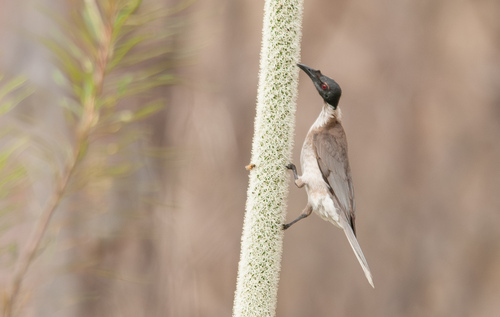 Noisy Friarbirdunverified
- Red Wattlebirdunverified
- Brown Honeyeaterunverified
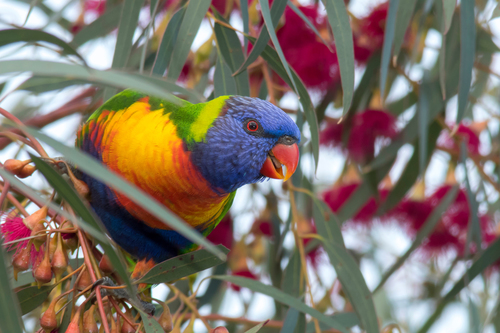 Rainbow Lorikeetunverified
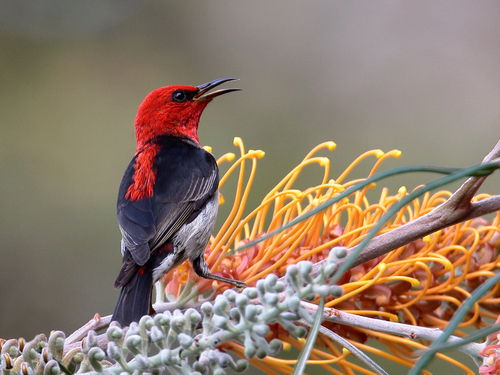 Scarlet Honeyeaterunverified
- New Holland Honeyeaterunverified
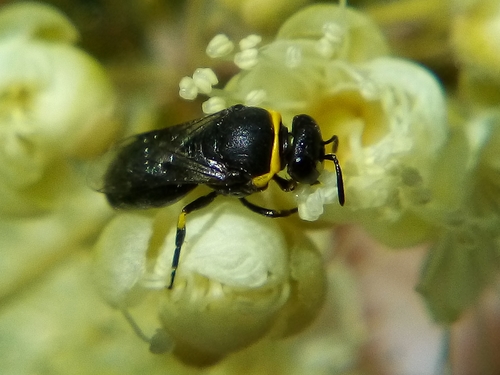
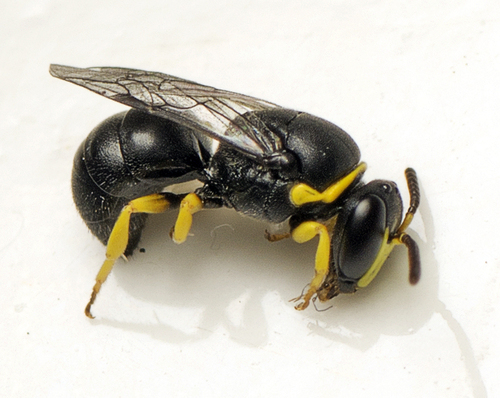
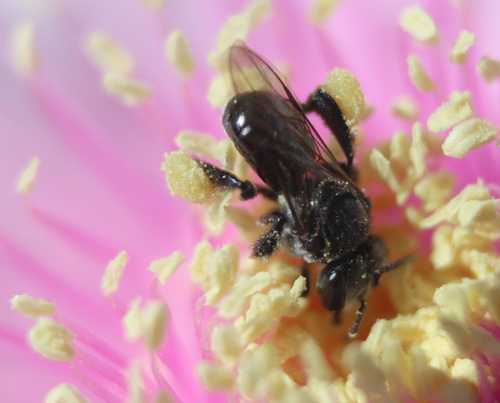
Also recorded with
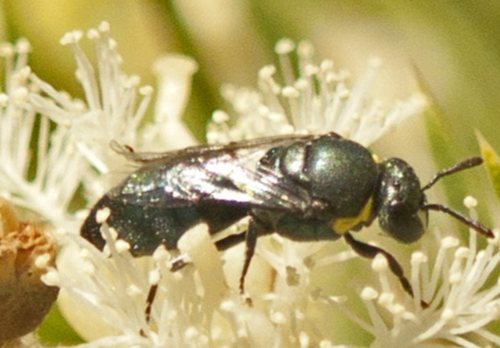
Where it belongs
It grows in open eucalypt forest on poorly drained soils, in a few places in north-east NSW (near Casino, Coraki and Coutts Crossing) and in south-east Queensland, including near Ipswich. It is listed as endangered in NSW and in Queensland.
Suburbs it belongs in include:
Related plants
Sources
- Melaleuca irbyana, NSW Threatened Species Profile, NSW Department of Climate Change, Energy, the Environment and Water
- Melaleuca irbyana, Flora of New South Wales, PlantNET, Royal Botanic Gardens and Domain Trust
- Melaleuca irbyana, Austplants
- Melaleuca irbyana, Plant Preservation and Nursery Network (PPNN)
- Rare or threatened plants, WetlandInfo, Queensland Government
- Native range: Australian Plant Census and Alien Flora of Australia. Wildlife links: GloBI and the studies cited on each animal page. All sources