Chenille Honeymyrtle
Melaleuca huegelii
Chenille Honeymyrtle (Melaleuca huegelii) is a shrub from the south-west of Western Australia, where it grows on sandy soils, limestone cliffs, coastal plains and dunes. It carries fragrant bottlebrush flowers in white or pink at the start of summer, and it is drought-hardy once established, which suits a sunny, low-water garden.
- Sun
- Full sun
- Soil
- Well drained, sand or limestone
- Water
- Dry once established
- Size
- 0.5–5 m tall
- Flowers
- White or pink, Sep–Dec
Photo: Emmett Serrano, CC BY, via iNaturalist
- Photo: Millie Brady, CC BY, via iNaturalist
- Photo: Lisa Bennett, CC BY, via iNaturalist
- Photo: David Thompson, CC BY, via iNaturalist
Growing it
Where to plant
Choose an open, full-sun position, ideally towards the back of a bed, and leave enough room that neighbouring plants don't overlap when it matures. Plant young seedlings in mid-autumn, before the winter rains, and avoid the hottest part of the year. It has also grown well on Australia's wetter east coast, provided the position is sunny and well drained.
Soil and water
It needs well-drained soil. If you add compost to the planting hole, use a vegetable-based one without manure. Water seedlings twice a week over their first summer, making sure the water reaches the roots, and use a soil wetting agent and coarse mulch. Once established it is drought-hardy and needs no extra water. Some growers give a light fertiliser after flowering each year.
Pruning
A light prune each year encourages a bushy shape. Pinch off the top couple of centimetres of the growing tips once or twice a year. Remove dead or wayward stems at the base, and avoid cutting back into the hard woody stems.
Propagation
It is easy to grow from seed or cuttings.
What it looks like
Form
A medium to large shrub, usually 3 to 4 metres tall, though plants range from 0.5 to 5 metres. Plants pruned by wind and salt on the coast can stay very small.
Flowers
The flowers form bottlebrush spikes, 50 to 75 millimetres long, near the branch tips. The spikes are fragrant, with purple or pink buds that open to white stamens, and they appear from spring into early summer. Most plants are white-flowered, but subspecies pristicensis, found further north around Shark Bay, has mauve to pink flowers. A subspecies is a naturally distinct form within a species.
For wildlife
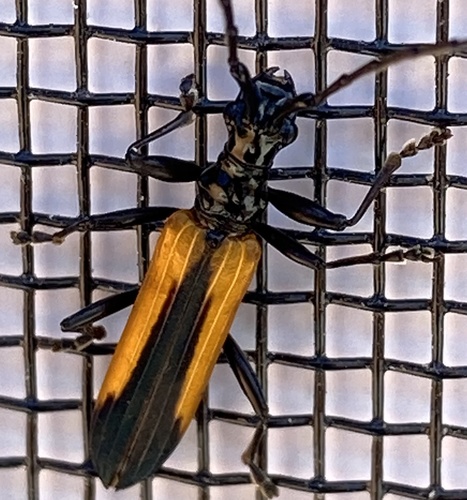
The flowers attract native bees, wasps, butterflies and beetles. The plant also provides food and habitat for invertebrates and birds, and habitat for frogs. Leaving fallen leaves and dead branches on and under it gives insects shelter.
Where it belongs
Native to Western Australia, mostly in the south-west including the Perth and Swan Coastal Plain, on sandy soils, limestone cliffs, coastal plains and dunes. It is not listed as threatened.
Suburbs it belongs in include:
Related plants
Sources
- Melaleuca huegelii, FloraBase, Department of Biodiversity, Conservation and Attractions (WA)
- Melaleuca huegelii, Australian Native Plants Society (ANPSA)
- Melaleuca huegelii (Chenille Honeymyrtle), Cottesloe Coastcare
- Chenille Honey-myrtle, ReWild Perth
- Native range: Australian Plant Census and Alien Flora of Australia. Wildlife links: GloBI and the studies cited on each animal page. All sources