Parrot Bush
Banksia sessilis
Parrot Bush (Banksia sessilis) is a prickly shrub or small tree from south-western Western Australia, where it grows in sandy and limestone soils. It is worth growing for its cream-yellow flowerheads, which open through the cooler months and feed honeyeaters, and for how well it copes with dry, well-drained gardens. It suits larger blocks rather than small yards.
Prickly. The leaves are prickly, so wear gloves when planting or pruning.
- Sun
- Full sun or light shade
- Soil
- Well-drained sand, gravel or limestone
- Water
- Well drained, drought tolerant
- Size
- 0.5–5 m tall
- Flowers
- Cream-yellow, Apr–Nov
- Frost
- Tolerates moderate frost
Photo: Millie Brady, CC BY, via iNaturalist
- Photo: Morten Ross, CC BY, via iNaturalist
- Photo: Scott Bazely, CC0, via iNaturalist
- Photo: Carmy, CC BY-SA, via iNaturalist
Growing it
Plant it in full sun or light shade, in soil that drains quickly. In the wild it grows in white, grey or yellow sand, and on limestone, laterite and granite, so a sandy or gravelly bed suits it. It also does well on alkaline, limestone soils.
Waterlogging is the main risk. The plant is very susceptible to dieback caused by Phytophthora cinnamomi, a soil-borne water mould that causes root rot, so avoid heavy clay and low spots that stay wet.
Once established it tolerates drought and moderate frost. It is best raised from seed, which germinates in about five or six weeks, and plants can take two years to flower. Cuttings rarely strike.
What it looks like
Parrot Bush is an upright shrub or small tree with dark green, prickly leaves about 2–6 cm long. Its young stems are covered in fine hairs that wear off as they mature.
The flowers form dome-shaped heads of cream-yellow flowers that appear from April to November, mostly through the cooler months. After flowering, woody cones hold the seed that cockatoos feed on.
For wildlife
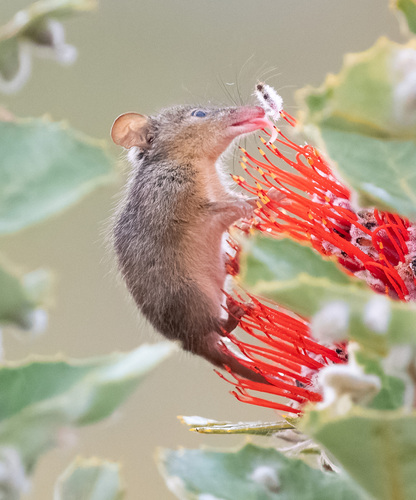
The nectar draws honeyeaters, which also feed on the insects that visit the flowers. Native bees and European honey bees work the flowers too.
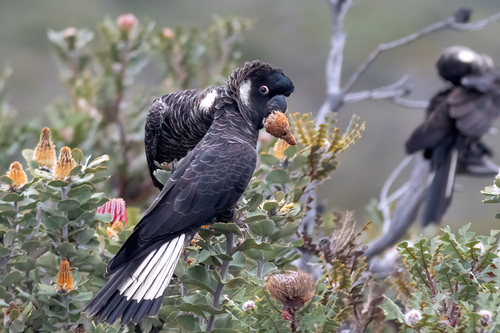
Carnaby's Black-Cockatoo is endangered. It prises open the hard seed cones of banksias, and Parrot Bush is one of the banksias it feeds on. The Australian ringneck also eats the seed.
Threatened wildlife that uses it
Flowers visited by
Eaten by
Where it belongs
Parrot Bush is endemic to south-western Western Australia, in the Southwest Botanical Province. It occurs across the Jarrah Forest, Swan Coastal Plain, Warren, Avon Wheatbelt and Geraldton Sandplains bioregions.
Suburbs it belongs in include:
Related plants
Sources
- Banksia sessilis (Knight) A.R.Mast & K.R.Thiele, FloraBase, Western Australian Herbarium (DBCA)
- Dryandra sessilis: Parrot Bush, Gardening With Angus
- Carnaby's Black-cockatoo, Australian Wildlife Conservancy
- Banksia sessilis the forgotten food, Will Stock, Bushland Perth (2024)
- Banksia sessilis, Wikipedia
- Native range: Australian Plant Census and Alien Flora of Australia. Wildlife links: GloBI and the studies cited on each animal page. All sources